5 Practical Tips for Online Teaching That You Can Only Get From Another Teacher

We learned a lot from our Taking STEM Online pilot program! Get practical tips from expert Maria Andersen to improve online instruction and remote learning support.

We just finished our pilot cohort of an online training and mentoring program we have since developed into Taking STEM Online. It's taught by Maria Andersen, one of our resident remote learning and online instruction experts. We learned a lot through the pilot and have used it to add more features to the program, more support, and broaden who we serve. We've opened the program up to any STEM discipline, not just math.

After the intensive full day of live training, participants have a live session each week Maria and members of the cohort. These sessions allow her to do some additional training on topics they want more information on and to answer questions. Lots and lots of tips are shared that are practical and come from someone who has taught remotely and online for more than a decade. They are tips you can only get from other teachers. Here are just 5 that were offered today.

“The first two weeks of the course are the most important.”

1.  The first two weeks of the course are the most important. You establish expectations for everything, which determines if your semester will be enjoyable or not. Because it's so important, set aside plenty of time to attend to students in the first couple of weeks.

2. Students are going to have a lot of little issues with tech throughout the first couple of weeks. In one of the early weeks of the course, offer 5 fifteen minute sessions and tell students you expect them to attend one. At those sessions, you can troubleshoot technology. It can be fast to take care of an issue live and it helps you get to know your students and start building that class connection we all crave.

3. OneNote is a great way to grade scanned work from students and add feedback. And if you need help finding the printer option (as we did), it's in the three dots at the top right of the screen. Printing to a file allows you to share the final document.

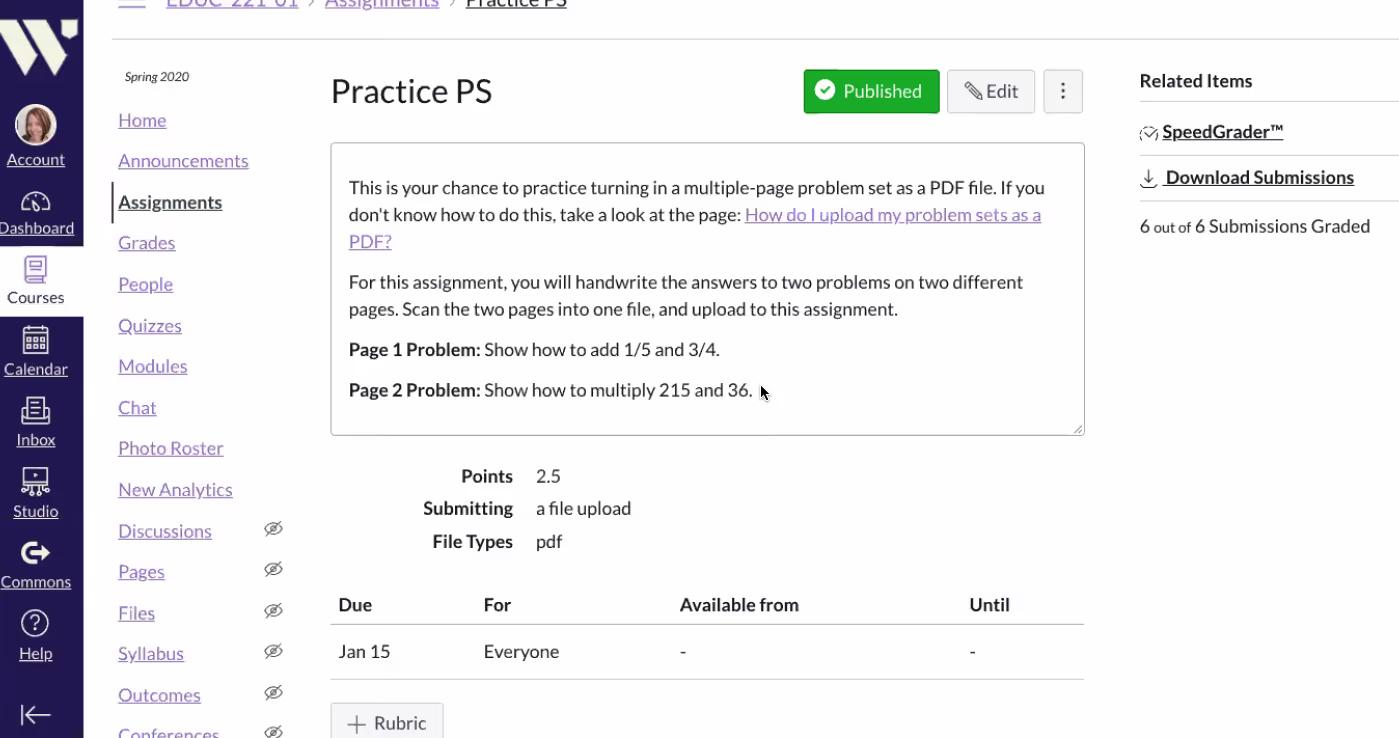
4. If you want students to understand the processes and expectations for assignments, give them the world's easiest math assignment so they can practice. Below is an image from Maria's LMS where she has this assignment posted. It helps everyone avoid the first quiz or test craziness that often come with technology.
 

5. We’ve provided some tips on reducing cheating in previous blogs. Another way that was mentioned today is to provide a respectful environment. Students need to feel the class and grading are fair, that the test is not a "gotcha!" moment. One way to help this is to write objectives or competencies for the course that you teach to and assess. The students get the list and you use the list regularly to build your course but also assess learning. Maria's exam review isn't a pretest that looks like the real test. It's a list of objectives and questions related to them so that students understand what the objective measures and what her expectations are. She doesn't change the numbers of the problems and use them for the actual test. Using assessment in this way has reduced the desire for students to cheat. Not eliminate, but definitely reduced.

5 Practical Tips for Online Teaching That You Can Only Get From Another Teacher

We learned a lot from our Taking STEM Online pilot program! Get practical tips from expert Maria Andersen to improve online instruction and remote learning support.

Download Resource

We just finished our pilot cohort of an online training and mentoring program we have since developed into Taking STEM Online. It's taught by Maria Andersen, one of our resident remote learning and online instruction experts. We learned a lot through the pilot and have used it to add more features to the program, more support, and broaden who we serve. We've opened the program up to any STEM discipline, not just math.

After the intensive full day of live training, participants have a live session each week Maria and members of the cohort. These sessions allow her to do some additional training on topics they want more information on and to answer questions. Lots and lots of tips are shared that are practical and come from someone who has taught remotely and online for more than a decade. They are tips you can only get from other teachers. Here are just 5 that were offered today.

“The first two weeks of the course are the most important.”

1.  The first two weeks of the course are the most important. You establish expectations for everything, which determines if your semester will be enjoyable or not. Because it's so important, set aside plenty of time to attend to students in the first couple of weeks.

2. Students are going to have a lot of little issues with tech throughout the first couple of weeks. In one of the early weeks of the course, offer 5 fifteen minute sessions and tell students you expect them to attend one. At those sessions, you can troubleshoot technology. It can be fast to take care of an issue live and it helps you get to know your students and start building that class connection we all crave.

3. OneNote is a great way to grade scanned work from students and add feedback. And if you need help finding the printer option (as we did), it's in the three dots at the top right of the screen. Printing to a file allows you to share the final document.

4. If you want students to understand the processes and expectations for assignments, give them the world's easiest math assignment so they can practice. Below is an image from Maria's LMS where she has this assignment posted. It helps everyone avoid the first quiz or test craziness that often come with technology.


5. We’ve provided some tips on reducing cheating in previous blogs. Another way that was mentioned today is to provide a respectful environment. Students need to feel the class and grading are fair, that the test is not a "gotcha!" moment. One way to help this is to write objectives or competencies for the course that you teach to and assess. The students get the list and you use the list regularly to build your course but also assess learning. Maria's exam review isn't a pretest that looks like the real test. It's a list of objectives and questions related to them so that students understand what the objective measures and what her expectations are. She doesn't change the numbers of the problems and use them for the actual test. Using assessment in this way has reduced the desire for students to cheat. Not eliminate, but definitely reduced.

Gateway Success Starts Here

Almy Education is the only gateway course consultancy that combines proven methodology with hands-on 'done with you' implementation support, led by current and former faculty who understand both systemic change management and classroom realities.

Get Started