Dissecting the News: A Closer Look at CCRC’s Research on Guided Pathways

The CCRC published a report on Guided Pathways and equitable outcomes. We dissect the research to see how it can truly impact community college student success.

In September 2021, the Community College Research Center (CCRC) published the report “How to Achieve More Equitable Community College Student Outcomes - Lessons From Six Years of CCRC Research on Guided Pathways.”

In it, it’s mentioned that CCRC’s 2015 book, “Redesigning America’s Community Colleges: A Clearer Path to Student Success,” catalyzed national reform. As noted, “since its publication, hundreds of community colleges have sought to implement whole-college reforms using the guided pathways model outlined in the book, either on their own or as part of a national or state initiative.” Because of this, CCRC has “studied the adoption, implementation, costs, and effects of these reforms at over 100 colleges and interacted with thousands of practitioners implementing guided pathways through institutes, webinars, and workshops.” This work increased CCRC’s understanding of the role of guided pathways and equity.

In this new report, CCRC shares its findings on the evolution of guided pathways in the past six years. As stated, there has been tremendous growth in five areas, including “program organization and design, new student onboarding, remediation, and academic support, ongoing student advising, and teaching and learning.”

What makes this report incredibly valuable is that it dives deep into five essential areas, supplying data referring to implementation, equity, and student outcomes. Below is a summary of CCRC’s advances (taken directly from “How to Achieve More Equitable Community College Student Outcomes - Lessons From Six Years of CCRC Research on Guided Pathways”).
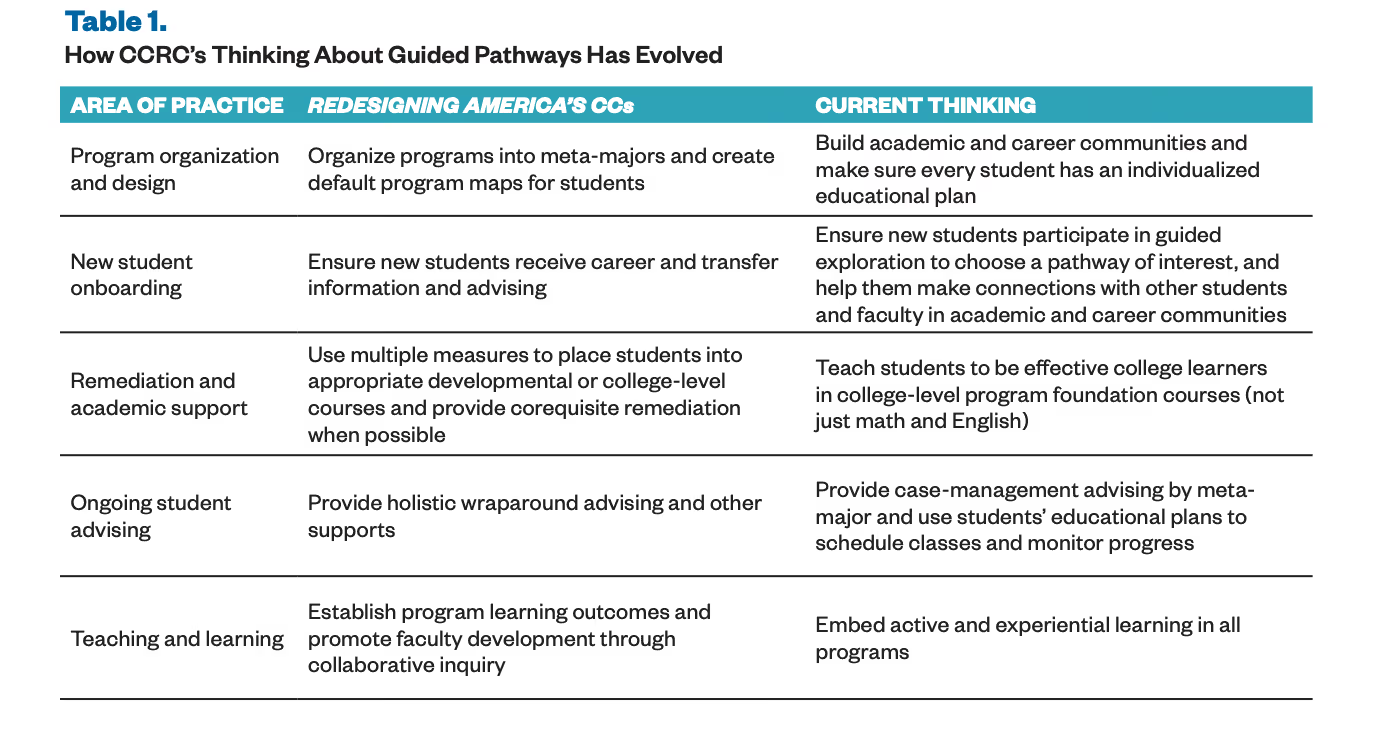
Table Exhibit: How CCRC's Thinking About Guided Pathways Has Evolved

The table provided is a snapshot of what CCRC learned for its 2015 publication and a glimpse into how that learning has evolved over the past six years. To review the five essential areas in full detail, we invite you to view the full report.

Notes From Kathy Almy (CEO of Almy Education)

The 2015 book, “Redesigning America’s Community Colleges: A Clearer Path to Student Success,” has been one of the most foundational references I’ve used in my work. To this day, I continue to consult it regularly. While we at Almy Education integrate best practices and research into all the work we do with colleges, we know that this work will always continue to change and evolve. Especially in this field, we know that frequent research is essential to adjust our practices, leave the ineffective ones (and assumptions), and focus on interventions that prove to be more effective.

The follow-up report in 2021 is beneficial to someone like me because it shows where CCRC was in 2015 and where they are now. Some of their findings echoed my own experiences and philosophy, while other parts caused me to pause and reconsider my actions and thought process.

For example, CCRC emphasizes the need for more academic support in foundational classes other than English and math. These two disciplines get the most focus for remediation, but they’re not the only places where interventions are needed to support students. The findings make sense and align with the needs of some of the colleges we’re assisting with redesigns; they continue to look at other courses, such as science, for places where support is needed.

CCRC provides regular research and reports that are incredibly valuable to practitioners. There’s no degree in developmental redesign. This body of knowledge evolves and grows daily, and staying up-to-date with the research and connecting that to our work with colleges is extremely important to me and Almy Education. Two years can be a lifetime in this work, and the stakes are so high - student outcomes that affect their lives and earning potential. I intend to take notes on their recommendations that affect my day-to-day work, and I encourage anyone working on improving student outcomes, from the classroom level to the college level, to do the same.

Dissecting the News: A Closer Look at CCRC’s Research on Guided Pathways

The CCRC published a report on Guided Pathways and equitable outcomes. We dissect the research to see how it can truly impact community college student success.

Download Resource

In September 2021, the Community College Research Center (CCRC) published the report “How to Achieve More Equitable Community College Student Outcomes - Lessons From Six Years of CCRC Research on Guided Pathways.”

In it, it’s mentioned that CCRC’s 2015 book, “Redesigning America’s Community Colleges: A Clearer Path to Student Success,” catalyzed national reform. As noted, “since its publication, hundreds of community colleges have sought to implement whole-college reforms using the guided pathways model outlined in the book, either on their own or as part of a national or state initiative.” Because of this, CCRC has “studied the adoption, implementation, costs, and effects of these reforms at over 100 colleges and interacted with thousands of practitioners implementing guided pathways through institutes, webinars, and workshops.” This work increased CCRC’s understanding of the role of guided pathways and equity.

In this new report, CCRC shares its findings on the evolution of guided pathways in the past six years. As stated, there has been tremendous growth in five areas, including “program organization and design, new student onboarding, remediation, and academic support, ongoing student advising, and teaching and learning.”

What makes this report incredibly valuable is that it dives deep into five essential areas, supplying data referring to implementation, equity, and student outcomes. Below is a summary of CCRC’s advances (taken directly from “How to Achieve More Equitable Community College Student Outcomes - Lessons From Six Years of CCRC Research on Guided Pathways”).

Table Exhibit: How CCRC's Thinking About Guided Pathways Has Evolved

The table provided is a snapshot of what CCRC learned for its 2015 publication and a glimpse into how that learning has evolved over the past six years. To review the five essential areas in full detail, we invite you to view the full report.

Notes From Kathy Almy (CEO of Almy Education)

The 2015 book, “Redesigning America’s Community Colleges: A Clearer Path to Student Success,” has been one of the most foundational references I’ve used in my work. To this day, I continue to consult it regularly. While we at Almy Education integrate best practices and research into all the work we do with colleges, we know that this work will always continue to change and evolve. Especially in this field, we know that frequent research is essential to adjust our practices, leave the ineffective ones (and assumptions), and focus on interventions that prove to be more effective.

The follow-up report in 2021 is beneficial to someone like me because it shows where CCRC was in 2015 and where they are now. Some of their findings echoed my own experiences and philosophy, while other parts caused me to pause and reconsider my actions and thought process.

For example, CCRC emphasizes the need for more academic support in foundational classes other than English and math. These two disciplines get the most focus for remediation, but they’re not the only places where interventions are needed to support students. The findings make sense and align with the needs of some of the colleges we’re assisting with redesigns; they continue to look at other courses, such as science, for places where support is needed.

CCRC provides regular research and reports that are incredibly valuable to practitioners. There’s no degree in developmental redesign. This body of knowledge evolves and grows daily, and staying up-to-date with the research and connecting that to our work with colleges is extremely important to me and Almy Education. Two years can be a lifetime in this work, and the stakes are so high - student outcomes that affect their lives and earning potential. I intend to take notes on their recommendations that affect my day-to-day work, and I encourage anyone working on improving student outcomes, from the classroom level to the college level, to do the same.

Gateway Success Starts Here

Almy Education is the only gateway course consultancy that combines proven methodology with hands-on 'done with you' implementation support, led by current and former faculty who understand both systemic change management and classroom realities.

Get Started